opening
The Wild Bunch Introduced
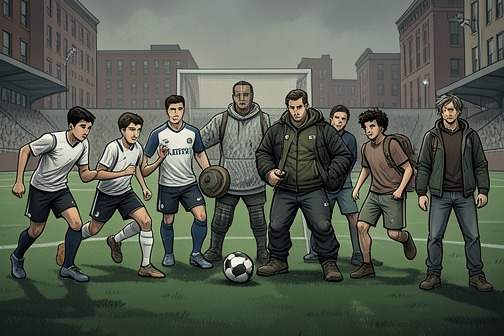
[Kevin](entity:character-recall-character-kevin-a4705189f694) introduces the [Wild Soccer Bunch](entity:character-recall-character-wild-soccer-bunch-80b0cf739ad9) as a fiercely loyal group of young players in [Chicago](entity:location-recall-location-73935e623d95). He describes [Danny](entity:character-recall-character-danny-318bc697472f)’s speed, [Tyler](entity:character-recall-character-tyler-ea3bef659768)’s leadership, [Kyle](entity:character-recall-character-kyle-7dd591f8eb9a)’s goalkeeping, [Alex Alexander](entity:character-recall-character-alex-alexander-c0b97a470040)’s power, [Julian Fort Knox](entity:character-recall-character-julian-fort-knox-6c3b19d609f7)’s defense, [Roger](entity:character-recall-character-roger-4904421e469b)’s awkwardness, [Diego](entity:character-recall-character-diego-619035ec498e)’s bursts of speed, [Joey](entity:character-recall-character-joey-c35b090b613f)’s difficult home life, [Larry](entity:character-recall-character-larry-e4ec2b6e8fcf)’s guidance, and [Sox](entity:character-recall-character-sox-a35d75d7253a)’s unruly companionship.
four days before Spring break
Winter Traps the Players
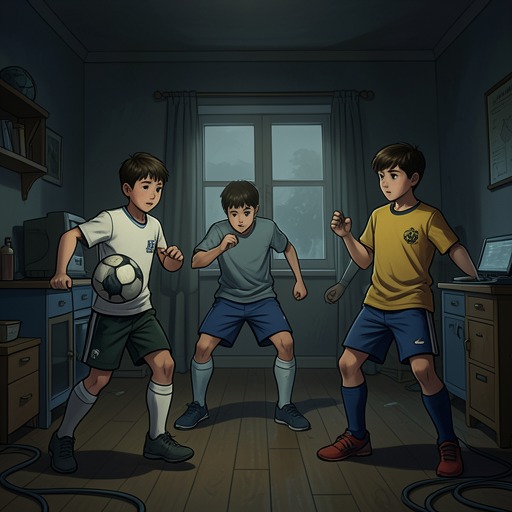
A lingering winter leaves the [soccer field](entity:location-recall-location-53ee86a5e3ef) buried under snow and ice just before [Spring break](entity:time-recall-time-spring-break-12d57e6de3ce). [Kevin](entity:character-recall-character-kevin-a4705189f694) and [Tyler](entity:character-recall-character-tyler-ea3bef659768), along with their friends, become restless and recreate matches inside their homes, turning bedrooms and living rooms into imaginary stadiums.
during the final days of Winter
The Indoor Soccer Battle
The children stage simultaneous indoor matches across [Wilson Street](entity:location-recall-location-wilson-street-66e5a04ad548), [Dearborn Street](entity:location-recall-location-dearborn-street-418efb13b31e), and [Woodlawn Avenue](entity:location-recall-location-woodlawn-avenue-d5488e93c7f6). [Danny](entity:character-recall-character-danny-318bc697472f) crashes into a bookshelf, [Kevin](entity:character-recall-character-kevin-a4705189f694) scores a bicycle-kick goal into a lamp, Julian collides with his mother, and [Alex Alexander](entity:character-recall-character-alex-alexander-c0b97a470040)’s powerful shot shatters a living-room window.
the morning after the indoor battle
Alex Kicks the Globe
After his soccer equipment is confiscated and thrown toward a garbage truck, [Alex Alexander](entity:character-recall-character-alex-alexander-c0b97a470040) refuses to accept a complete soccer ban. He dismantles [The globe](entity:object-recall-object-the-globe-afa30808872a), uses it as a substitute ball, and performs a bicycle kick that sends it through the remaining window and into his father’s head.
the day after Alex’s globe-kicking incident
The Team Loses Spring Break
The children go to school under gray skies while their classmates celebrate their [Spring break](entity:time-recall-time-spring-break-12d57e6de3ce) plans. The snow remains, [Larry’s stand](entity:location-recall-location-larry-0d0ff73be1a6) is closed, and the [soccer field](entity:location-recall-location-53ee86a5e3ef) is unusable, so the group gathers at the bleachers in despair.
the next morning
Spring Returns
Sunlight finally breaks through the frost, and [Kevin](entity:character-recall-character-kevin-a4705189f694) wakes to discover that [Spring](entity:time-recall-time-spring-5076a6d014bd) has arrived. [Tyler](entity:character-recall-character-tyler-ea3bef659768) is already dressed in soccer gear and has retrieved Kevin’s ball from [The hamster cage](entity:object-recall-object-the-hamster-cage-843de8b4c2e8) using the spare key.
the first morning of Spring break
The Grounded Players Escape
Across the neighborhood, the players find ways to evade [Grounding](entity:state-recall-state-grounding-0e5250844c8a) and [Soccer ban](entity:state-recall-state-soccer-ban-638481e9a97c). [Diego](entity:character-recall-character-diego-619035ec498e) disguises his [Fever](entity:state-recall-state-fever-b617404a5abb) with an ice cube, [Roger](entity:character-recall-character-roger-4904421e469b) escapes a forced hair-curling session, Julian and [Josh](entity:character-recall-character-josh-7784b47d315f) use a boom box as a decoy, [Danny](entity:character-recall-character-danny-318bc697472f) bargains with his mother after rescuing her china, and [Alex Alexander](entity:character-recall-character-alex-alexander-c0b97a470040) exits through a bathroom window and an apple tree.
that afternoon
The Parents Hear the Plan
The children explain the coming contest and their need for [Alex Alexander](entity:character-recall-character-alex-alexander-c0b97a470040) to his father. They present their rebellion as a matter of honor, pride, and team loyalty, even volunteering to share Alex Alexander’s punishment after the match.
the first day of Spring break
The Unbeatables Take the Field
When the group reaches the [soccer field](entity:location-recall-location-53ee86a5e3ef), they discover that [Mickey the Bulldozer](entity:character-recall-character-mickey-the-bulldoze-5162406bb064) and his older gang have occupied it. The [Unbeatables](entity:character-recall-character-unbeatables-71e95099c5e9) surround the younger children, use intimidation and roughness to establish control, and declare that only they may play there.
immediately after the takeover
Kevin Challenges Mickey
[Mickey the Bulldozer](entity:character-recall-character-mickey-the-bulldoze-5162406bb064) attacks [Danny](entity:character-recall-character-danny-318bc697472f) with the ball and orders the younger players to leave. [Kevin](entity:character-recall-character-kevin-a4705189f694) refuses, withstands repeated throws to his chest, and challenges the [Unbeatables](entity:character-recall-character-unbeatables-71e95099c5e9) to a match in two weeks.
two weeks before the match
The Soccer-Field Agreement
[Mickey the Bulldozer](entity:character-recall-character-mickey-the-bulldoze-5162406bb064) accepts [Kevin](entity:character-recall-character-kevin-a4705189f694)’s wager, promising that the [Unbeatables](entity:character-recall-character-unbeatables-71e95099c5e9) will surrender the field if they lose. The older boys immediately begin training, displaying frightening strength and precision through the fence.
the same afternoon
Larry Becomes Coach
The [Wild Soccer Bunch](entity:character-recall-character-wild-soccer-bunch-80b0cf739ad9) asks [Larry](entity:character-recall-character-larry-e4ec2b6e8fcf) to coach them because he has claimed to have played professionally. Larry admits that the children are badly outmatched and makes them acknowledge that they are frightened.
that evening
The Parents Resist Practice
The players return home to secure permission for practice. [Diego](entity:character-recall-character-diego-619035ec498e) is confined to bed with [Fever](entity:state-recall-state-fever-b617404a5abb), [Alex Alexander](entity:character-recall-character-alex-alexander-c0b97a470040) faces renewed discipline, and [Joey](entity:character-recall-character-joey-c35b090b613f)’s unstable home situation remains uncertain.
the next morning
The Mud-Field Training
At the [park near the lake](entity:location-recall-location-0596de5175cd), [Larry](entity:character-recall-character-larry-e4ec2b6e8fcf) leads the team onto a field full of mud, stones, and holes rather than allowing them to play normally. He makes them race in pairs, treating the obstacles as the physical presence of the [Unbeatables](entity:character-recall-character-unbeatables-71e95099c5e9) and the mud as their fear.
the second day of practice
The Tennis-Ball Training
[Larry](entity:character-recall-character-larry-e4ec2b6e8fcf) takes away [Kevin’s soccer ball](entity:object-recall-object-kevin-s-soccer-ball-02e3f5b2f4ea) and gives the team [The tennis ball](entity:object-recall-object-the-tennis-ball-11889588032f). Its erratic bounces frustrate everyone, while [Sox](entity:character-recall-character-sox-a35d75d7253a) howls from the sidelines and the players snap at one another.
the following three days
The Team Nearly Breaks
Heat, mosquitoes, sore muscles, [Diego](entity:character-recall-character-diego-619035ec498e)’s [Fever](entity:state-recall-state-fever-b617404a5abb), and [Sox](entity:character-recall-character-sox-a35d75d7253a)’s constant howling wear down the players. Their frustration turns into insults and shoving, and they blame [Larry](entity:character-recall-character-larry-e4ec2b6e8fcf) for an exercise they no longer understand.
four days before the match
Kevin Expels Roger and Josh
[Kevin](entity:character-recall-character-kevin-a4705189f694) argues that [Roger](entity:character-recall-character-roger-4904421e469b) and [Josh](entity:character-recall-character-josh-7784b47d315f) are too weak to remain on the team and demands their removal. Roger is devastated, Josh runs away, and the others remain silent rather than defend them.
the same afternoon
Joey Is Recruited
[Kevin](entity:character-recall-character-kevin-a4705189f694) finds [Joey](entity:character-recall-character-joey-c35b090b613f) at [Margate Park](entity:location-recall-location-margate-park-ddcbb8f97d82) and learns that Joey has no proper soccer gear because of [Poverty](entity:state-recall-state-poverty-8f7dcb410eb7) and his unstable home life. Joey’s worn sandals do not prevent him from displaying extraordinary skill.
later that afternoon
Kyle Joins in Secret
[Joey](entity:character-recall-character-joey-c35b090b613f) leads [Kevin](entity:character-recall-character-kevin-a4705189f694) to [Kyle](entity:character-recall-character-kyle-7dd591f8eb9a), who is secretly practicing soccer behind his family’s mansion. Kyle’s father forbids the sport and wants him to become a golfer, creating a private conflict between the boy’s talent and his father’s ambitions.
two days before the match
The New Team Takes Shape
[Joey](entity:character-recall-character-joey-c35b090b613f) and [Kyle](entity:character-recall-character-kyle-7dd591f8eb9a) quickly demonstrate their abilities, and the [Wild Soccer Bunch](entity:character-recall-character-wild-soccer-bunch-80b0cf739ad9) stops mourning [Roger](entity:character-recall-character-roger-4904421e469b) and [Josh](entity:character-recall-character-josh-7784b47d315f). [Larry](entity:character-recall-character-larry-e4ec2b6e8fcf) continues coaching, though his sadness reveals that he knows the team’s victory may have come at the cost of friendship.
the day before the match
The Sox Passing Challenge
[Larry](entity:character-recall-character-larry-e4ec2b6e8fcf) challenges the players to make ten consecutive passes while [Sox](entity:character-recall-character-sox-a35d75d7253a) tries to steal the ball. At first the dog’s speed and instinct overwhelm them, and every player complains that the test is unfair.
the afternoon before the match
Mickey Attacks Training
[Mickey the Bulldozer](entity:character-recall-character-mickey-the-bulldoze-5162406bb064) and the [Unbeatables](entity:character-recall-character-unbeatables-71e95099c5e9) invade the lakeside training session after destroying [Larry’s stand](entity:location-recall-location-larry-0d0ff73be1a6) and exhausting their own supplies. Mickey mocks [Larry](entity:character-recall-character-larry-e4ec2b6e8fcf)’s claim to have been a professional and reveals that his father helped ruin Larry’s knee.
the evening before the match
The Team Rejects Larry
The players confront [Larry](entity:character-recall-character-larry-e4ec2b6e8fcf) about his lie. He tries to redirect their faith toward their own ability, but [Kevin](entity:character-recall-character-kevin-a4705189f694) calls him a liar and says they never want to see him again.
the night before the match
A Dark Night
None of the players sleeps well. [Kevin](entity:character-recall-character-kevin-a4705189f694) and [Tyler](entity:character-recall-character-tyler-ea3bef659768) argue over whether beating [Sox](entity:character-recall-character-sox-a35d75d7253a) matters when Mickey is strong enough to hurt dogs, while the rest of the group privately wrestles with the same fear.
match morning
The Team Reassembles
[Alex Alexander](entity:character-recall-character-alex-alexander-c0b97a470040) wakes [Danny](entity:character-recall-character-danny-318bc697472f) and persuades him that there is still a point to playing. The friends gather Julian and [Josh](entity:character-recall-character-josh-7784b47d315f), and Julian angrily denies being afraid when Josh jokes that he stayed behind because he wet his pants.
ten o’clock on match morning
The Monsters Await
[Diego](entity:character-recall-character-diego-619035ec498e) reaches the [soccer field](entity:location-recall-location-53ee86a5e3ef) while still suffering from [Fever](entity:state-recall-state-fever-b617404a5abb) and [Asthma](entity:state-recall-state-asthma-9096f400adf0). He and the others find the [Unbeatables](entity:character-recall-character-unbeatables-71e95099c5e9) transformed by torn clothes, painted faces, and threatening roars, while the remains of [Larry’s stand](entity:location-recall-location-larry-0d0ff73be1a6) lie scattered across the ground.
kickoff
Mickey Sets Ten Goals
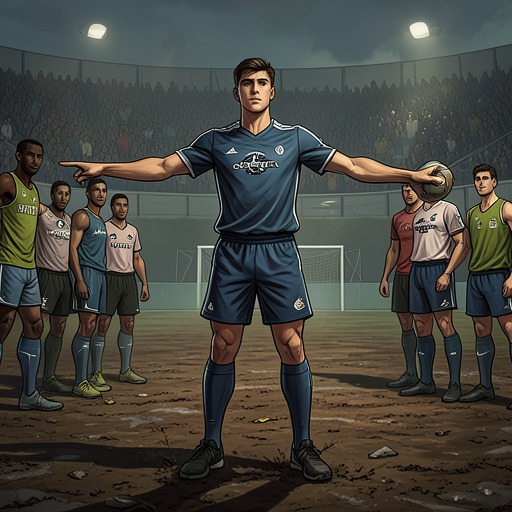
Mickey chooses a ten-goal limit and says the [Unbeatables](entity:character-recall-character-unbeatables-71e95099c5e9) will kick off with the sun in the [Wild Soccer Bunch](entity:character-recall-character-wild-soccer-bunch-80b0cf739ad9)’s eyes. He claims that the challenged side has the right to select the weapons and conditions.
first half
The Unbeatables Lead Five-Zero
Mickey scores immediately, then the [Unbeatables](entity:character-recall-character-unbeatables-71e95099c5e9) exploit the [Wild Soccer Bunch](entity:character-recall-character-wild-soccer-bunch-80b0cf739ad9)’s confusion. They use force against [Danny](entity:character-recall-character-danny-318bc697472f) and [Tyler](entity:character-recall-character-tyler-ea3bef659768), defend rough play as permitted body contact, and frighten Julian into abandoning his usual defensive courage.
halftime
Roger and Josh Seek Help
[Roger](entity:character-recall-character-roger-4904421e469b) and [Josh](entity:character-recall-character-josh-7784b47d315f) secretly watch the match from outside the fence. At first they cheer for the [Unbeatables](entity:character-recall-character-unbeatables-71e95099c5e9) out of wounded pride, but Roger eventually rejects the humiliation of seeing his former teammates destroyed.
late in the first half break
Larry Returns
[Roger](entity:character-recall-character-roger-4904421e469b) finds [Larry](entity:character-recall-character-larry-e4ec2b6e8fcf) beside the lake surrounded by empty beer bottles. Larry explains that he poured them out because drinking encouraged him to tell tall tales, but he still believes he has no right to return after lying.
early in the second half
Joey and Kyle Arrive
[Joey](entity:character-recall-character-joey-c35b090b613f) escapes his sleeping mother and races to the field, meeting [Kyle](entity:character-recall-character-kyle-7dd591f8eb9a) on the way. They arrive to find the [Wild Soccer Bunch](entity:character-recall-character-wild-soccer-bunch-80b0cf739ad9) down five goals and badly shaken.
immediately before the comeback
The Repair Rule
[Larry](entity:character-recall-character-larry-e4ec2b6e8fcf) returns and [Joey](entity:character-recall-character-joey-c35b090b613f) declares that the [Wild Soccer Bunch](entity:character-recall-character-wild-soccer-bunch-80b0cf739ad9) will have the last laugh. [Roger](entity:character-recall-character-roger-4904421e469b) adds a condition to the renewed contest: the losing team must repair Larry’s destroyed stand.
the second-half kickoff
The Wild Bunch Reconnects
The players form their first unified circle and shout “[ONE, TWO, THREE WILD!](entity:expression-recall-expression-one-two-three-wild-194192a98531)” They exchange rapid passes through the [Unbeatables](entity:character-recall-character-unbeatables-71e95099c5e9), moving as [Larry](entity:character-recall-character-larry-e4ec2b6e8fcf) taught them rather than relying on [Kevin](entity:character-recall-character-kevin-a4705189f694) alone.
shortly after the restart
Alex Scores First
[Larry](entity:character-recall-character-larry-e4ec2b6e8fcf) orders [Kevin](entity:character-recall-character-kevin-a4705189f694) to pass to [Alex Alexander](entity:character-recall-character-alex-alexander-c0b97a470040) instead of shooting. Kevin follows the instruction, and Alex Alexander’s powerful strike carries [Octopus](entity:character-recall-character-octopus-672953eeb4e7) into the net with the ball.
midway through the second half
The Comeback Begins
[Julian Fort Knox](entity:character-recall-character-julian-fort-knox-6c3b19d609f7) overcomes his fear and repeatedly stops [Kong](entity:character-recall-character-kong-26ed23eccfc1), while [Joey](entity:character-recall-character-joey-c35b090b613f), [Danny](entity:character-recall-character-danny-318bc697472f), [Tyler](entity:character-recall-character-tyler-ea3bef659768), [Kevin](entity:character-recall-character-kevin-a4705189f694), and [Diego](entity:character-recall-character-diego-619035ec498e) combine through the rain and mud. The [Wild Soccer Bunch](entity:character-recall-character-wild-soccer-bunch-80b0cf739ad9) uses the difficult conditions to its advantage because it has trained in similar terrain for nearly two weeks.
late in the second half
Tyler Takes the Lead
[Tyler](entity:character-recall-character-tyler-ea3bef659768) controls midfield and scores from distance when the wind carries his shot beyond [Octopus](entity:character-recall-character-octopus-672953eeb4e7)’s reach. [Diego](entity:character-recall-character-diego-619035ec498e) then recovers his speed despite [Asthma](entity:state-recall-state-asthma-9096f400adf0), helping the [Wild Soccer Bunch](entity:character-recall-character-wild-soccer-bunch-80b0cf739ad9) move into a nine-to-seven lead.
after the ninth Wild Bunch goal
Kevin Is Benched
[Kevin](entity:character-recall-character-kevin-a4705189f694) loses possession because he refuses to pass and tries to score the decisive tenth goal himself. [Larry](entity:character-recall-character-larry-e4ec2b6e8fcf) removes him from the field and replaces him with [Roger](entity:character-recall-character-roger-4904421e469b).
final minutes
The Match Reaches Nine-Nine
Mickey scores, and the [Unbeatables](entity:character-recall-character-unbeatables-71e95099c5e9) close the gap. [Roger](entity:character-recall-character-roger-4904421e469b) misses a chance, the Grim Reaper equalizes, and the next goal becomes decisive.
the final attack
Kevin Makes the Assist
[Kevin](entity:character-recall-character-kevin-a4705189f694) wins the ball from [Kong](entity:character-recall-character-kong-26ed23eccfc1) and races forward, initially ignoring calls to pass. When [Mickey the Bulldozer](entity:character-recall-character-mickey-the-bulldoze-5162406bb064) slides toward him like a crashing aircraft, Kevin sees [Roger](entity:character-recall-character-roger-4904421e469b) open on the right and makes the pass he would once have refused to attempt.
the final seconds
Roger Scores the Winner
[Roger](entity:character-recall-character-roger-4904421e469b) strikes the ball with his left foot despite [Kevin](entity:character-recall-character-kevin-a4705189f694)’s warning not to use it. This time he connects cleanly and sends the ball into the net, giving the [Wild Soccer Bunch](entity:character-recall-character-wild-soccer-bunch-80b0cf739ad9) a ten-to-nine victory.
immediately after the victory
Sox Drives Away the Unbeatables
Mickey refuses to accept the result and threatens the victorious players with a bicycle chain. The children retreat until [Josh](entity:character-recall-character-josh-7784b47d315f) and [Sox](entity:character-recall-character-sox-a35d75d7253a) appear behind them.
the ending
The Field Is Restored
With the [Unbeatables](entity:character-recall-character-unbeatables-71e95099c5e9) gone, the [Wild Soccer Bunch](entity:character-recall-character-wild-soccer-bunch-80b0cf739ad9) celebrates beneath clearing skies. [Roger](entity:character-recall-character-roger-4904421e469b) and [Kevin](entity:character-recall-character-kevin-a4705189f694) restore their friendship, and [Sox](entity:character-recall-character-sox-a35d75d7253a) proudly wags his tail beside the reunited team.